Posted by: Asad Ishaq
Nokia Downfall: The Strategic Mistakes That Changed Mobile History
“Success is a poor teacher. It seduces smart people into thinking they can’t lose.” – Bill Gates
For more than a decade, Nokia was the undisputed king of the mobile phone industry. The Finnish company connected billions of people worldwide and became synonymous with reliability, innovation, and durability. At its peak, Nokia controlled over 40% of the global mobile phone market and was one of the most valuable technology companies in the world.
Yet within a few years, the company that once dominated the industry found itself struggling for survival. The story of Nokia’s decline is one of missed opportunities, strategic mistakes, and an inability to adapt to a rapidly changing technological landscape.
Nokia Rise to Global Dominance
Founded in 1865 as a paper mill company in Finland, Nokia evolved through various industries before entering telecommunications. During the 1990s and early 2000s, the company revolutionized mobile communication with iconic devices such as the Nokia 3310, Nokia 1100, and Nokia N95.
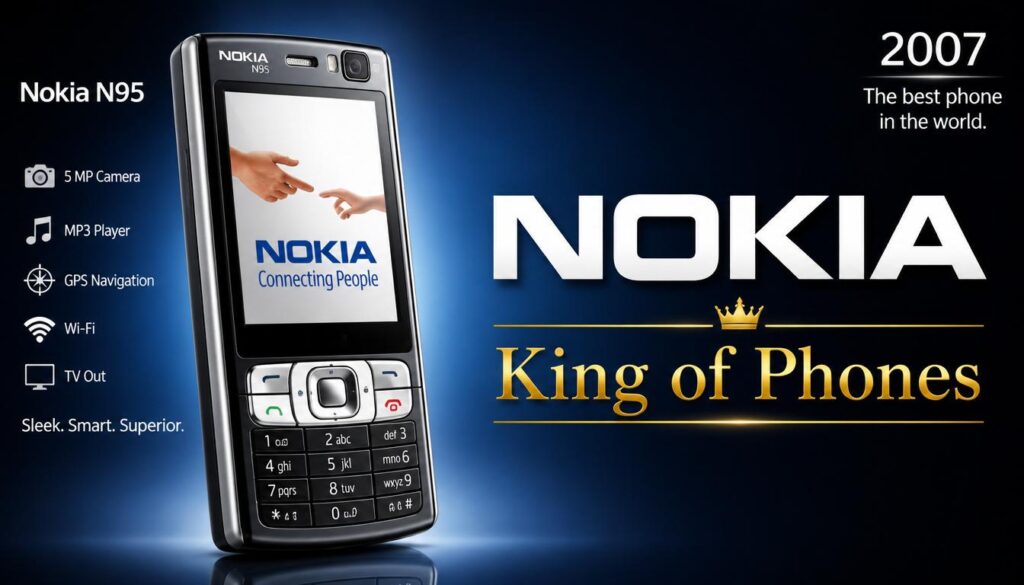
The company’s phones were known for their durability, long battery life, and user-friendly design. By 2007, Nokia was selling hundreds of millions of devices annually and generating billions of dollars in revenue. The brand had become a household name across Europe, Asia, Africa, and the Americas.
At its peak, Nokia employed more than 130,000 people worldwide and was a symbol of Finland’s technological excellence.
The Smartphone Revolution Changes Everything
The turning point came in 2007 when Apple introduced the revolutionary iPhone. Unlike traditional mobile phones, the iPhone focused on touch-screen technology, internet connectivity, and mobile applications.
A year later, Google launched Android, providing smartphone manufacturers with an open-source operating system that could be customized and improved rapidly.
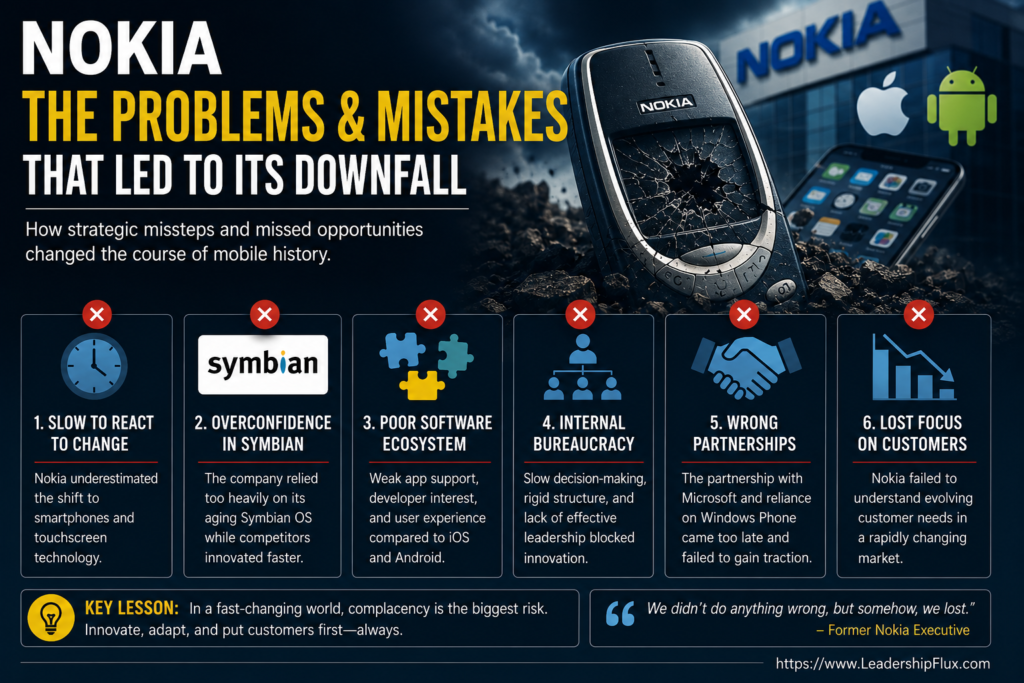
While competitors embraced these innovations, Nokia remained heavily invested in its existing Symbian operating system. Management underestimated the significance of touch-screen smartphones and believed customers would continue preferring traditional keypad-based devices.
This strategic miscalculation would prove costly.
The Symbian Problem
One of Nokia’s biggest challenges was its aging Symbian operating system. Although Symbian had dominated earlier smartphones, it struggled to compete with the user-friendly interfaces offered by Apple’s iOS and Google’s Android.
Developers found it difficult to create applications for Symbian, resulting in a weak app ecosystem. Meanwhile, Apple’s App Store and Google Play Store were attracting millions of developers and users.
Consumers increasingly wanted smartphones that could run modern applications, browse the internet efficiently, and provide seamless user experiences. Nokia’s software failed to meet these expectations.
The company had world-class hardware but lacked competitive software, creating a dangerous gap between Nokia and its rivals.
Internal Challenges and Slow Decision-Making
Many analysts believe Nokia’s decline was also driven by organizational issues. Reports suggested that internal bureaucracy slowed innovation and decision-making.
Managers were often reluctant to challenge leadership, resulting in delayed responses to market changes. While competitors moved quickly, Nokia struggled to execute strategic transformations.
Innovation existed within the company, but converting ideas into successful products became increasingly difficult.
The fast-moving technology industry rewards agility, and Nokia’s large corporate structure became a disadvantage during a period of rapid disruption.
The Microsoft Partnership
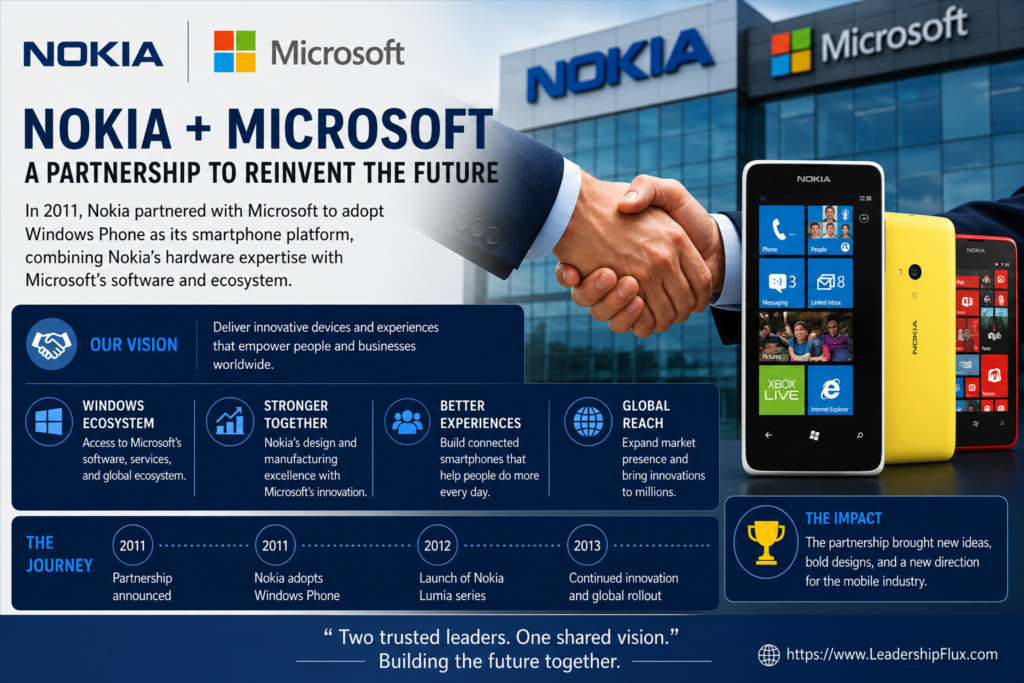
In 2011, Nokia attempted to reverse its fortunes by partnering with Microsoft and adopting the Windows Phone operating system.
The decision was controversial. By that time, Android had already become the dominant smartphone platform, while Apple’s iPhone continued to gain popularity.
Although Nokia produced well-designed Lumia smartphones, the Windows ecosystem lacked sufficient applications and developer support. Consumers were reluctant to switch from Android or iOS.
The partnership failed to generate the market share Nokia desperately needed.
Acquisition by Microsoft
As smartphone sales declined, Nokia’s financial performance deteriorated. In 2013, Microsoft announced the acquisition of Nokia’s mobile phone business for approximately $7.2 billion.
The deal marked the end of Nokia’s era as a leading mobile phone manufacturer.
For many industry observers, it was one of the most dramatic declines in corporate history. A company that once defined the mobile industry had lost its competitive edge within less than a decade.
Nokia Today
Despite losing its smartphone leadership, Nokia did not disappear.
The company shifted its focus toward telecommunications infrastructure, networking equipment, and 5G technology. Today, Nokia is a major player in global telecom networks and competes with companies such as Ericsson and Huawei.
While it no longer dominates consumer smartphones, Nokia remains an important technology company serving telecommunications operators worldwide.
Key Lessons from Nokia’s Fall
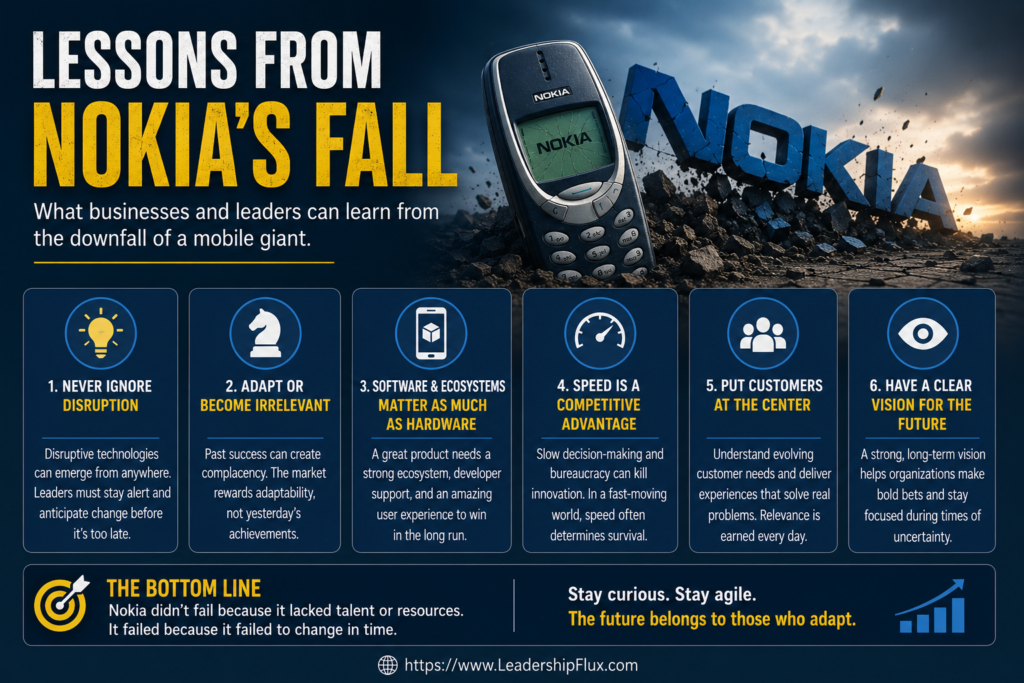
The fall of Nokia offers valuable lessons for leaders and businesses across all industries:
1. Never Ignore Disruptive Innovation
Market leaders can quickly become vulnerable when they underestimate emerging technologies.
2. Software Matters as Much as Hardware
Superior products require strong ecosystems, applications, and user experiences.
3. Adaptability Is Essential
Past success does not guarantee future success. Organizations must continuously evolve.
4. Speed Is a Competitive Advantage
Slow decision-making can be fatal in rapidly changing industries.
5. Listen to Customers
Companies must anticipate changing consumer preferences before competitors do.
Final Words
Nokia’s story is not simply about failure; it is about the dangers of complacency in an era of technological disruption. The company that once connected the world failed to recognize how quickly the mobile industry was changing.
Its decline remains one of the most studied business cases in corporate history, demonstrating that even the most dominant organizations can lose their leadership position if they fail to innovate and adapt.
The fall of Nokia serves as a timeless reminder that in business, success is never permanent. Companies that wish to remain leaders must continuously challenge themselves, embrace change, and prepare for the future before it arrives.
For more information, please visit: Articles Page